The best mobility scooters for seniors in 2026 restore the independence that reduced mobility can quietly take away. Whether you need a lightweight model that folds into a car boot, a reliable everyday machine for local errands, or a powerful heavy-duty scooter for longer outings, today’s options are safer, smarter, and more affordable than at any point in history. This guide covers everything you need to make the right choice — without the jargon.
📋 Key Takeaways for 2026
- Mobility scooter prices range from around $599 for portable travel models to $5,000+ for heavy-duty all-terrain machines
- Most mid-range scooters now offer a real-world range of 15–25 miles on a single charge
What Exactly Is a Mobility Scooter — and Do You Actually Need One?
A mobility scooter is a battery-powered personal vehicle designed for people who struggle to walk longer distances. You sit in a padded seat, steer using a handlebar-style tiller, and control your speed with a thumb throttle or push-button controls. Most models have three or four wheels, a rechargeable battery pack, and controls straightforward enough to master in a single afternoon.
You might benefit from one if walking to the shops leaves you in pain or exhaustion, if breathlessness sets in quickly, or if a health condition — arthritis, COPD, heart disease, Parkinson’s, or multiple sclerosis — makes walking unsafe or increasingly uncomfortable. Many older adults live with a significant mobility limitation, and the right assistive device can genuinely transform their daily freedom.
Crucially, using a mobility scooter isn’t about giving up. Occupational therapists widely describe it as one of the most empowering decisions their older patients make. Regaining the ability to leave the house independently, meet friends, attend events, and run your own errands has a measurable positive impact on both physical activity levels and mental wellbeing. Think of a mobility scooter not as a concession to ageing but as an upgrade to your independence.
⚠️ Important: As with any motorised assistive device, always consult your GP or physician before purchasing a mobility scooter. They can advise on the most appropriate type for your specific condition and, in many countries, may be able to refer you to funding schemes that reduce or eliminate the upfront cost.
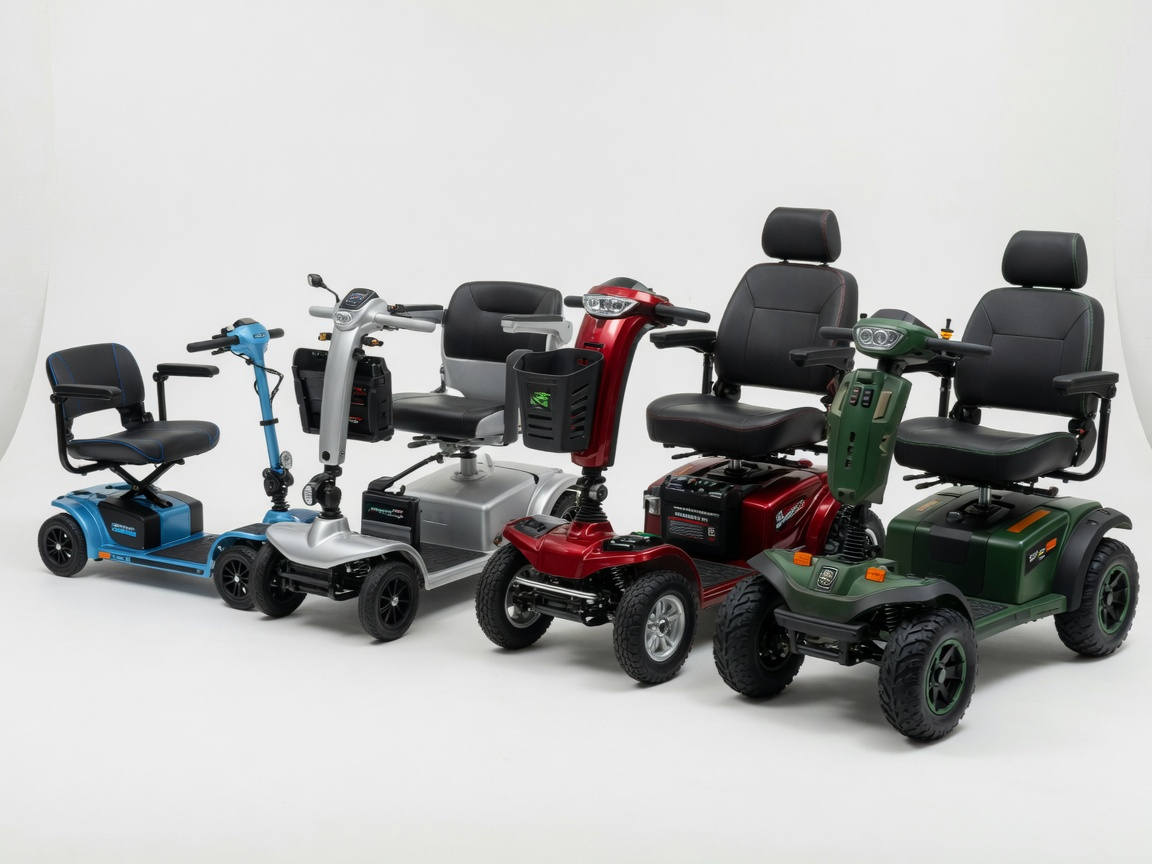
What Are the Main Types of Mobility Scooters Available in 2026?
Not all scooters are created equal, and buying the wrong type is the single most common mistake first-time buyers make. Mobility scooters fall into four broad categories — each designed for a different lifestyle and set of demands.
Travel / Portable Scooters
These are the lightest and most compact models on the market. They fold flat or disassemble into three to five pieces — each typically weighing under 30 lbs — so they can fit in a standard car boot without a ramp. Travel scooters offer around 8–12 miles of range per charge and a top speed of roughly 4 mph. They’re ideal if you want to take your scooter out in the car, on public transport, or on holiday. If you travel regularly, our in-depth guide to the 10 best travel mobility scooters for seniors covers the top portable models available today in detail.
Pavement / Mid-Range Scooters
The most popular choice in 2026, these all-rounders handle pavements, shopping centres, parks, and most everyday environments with ease. They’re larger than travel models, offer 15–20 miles of range per charge, and typically top out between 4 and 6 mph. They carry more weight, seat more comfortably, and last longer between services.
Road / Heavy-Duty Scooters
Built for longer journeys and heavier riders, these scooters can carry up to 500 lbs (226 kg) and travel up to 30 miles or more on a single charge. Many feature front and rear suspension, larger pneumatic tyres, and bright LED lighting for low-light conditions. In the UK, Class 3 road-legal models can be used on roads at up to 8 mph and must be registered and insured. In the US and Australia, road use rules for mobility scooters vary by state and territory — always check local regulations before riding on the road.
All-Terrain Scooters
The 4×4s of the mobility world. All-terrain models handle gravel paths, grass, slight inclines, and uneven ground that would stop a standard scooter immediately. They’re heavier and more expensive but perfect for seniors who love the outdoors — country parks, coastal promenades, garden centres, and rural paths. If getting outside on varied terrain matters to you, this category is worth every extra pound on the price tag.
| Type | Best For | Typical Range | Typical Weight | Approx. Price (2026) |
|---|---|---|---|---|
| Travel / Portable | Holidays, car trips, transport | 8–12 miles | 35–55 lbs (total) | $599–$1,200 |
| Pavement / Mid-Range | Daily errands, local outings | 15–20 miles | 100–150 lbs | $1,000–$2,500 |
| Heavy-Duty / Road | Longer journeys, heavier riders | 20–30 miles | 150–250 lbs | $1,500–$4,000 |
| All-Terrain | Outdoor use, rough ground | 15–25 miles | 150–200 lbs | $2,000–$5,000 |

What Key Features Should You Look for When Choosing a Mobility Scooter?
Once you’ve identified the right category, these six features make the biggest difference to real-world comfort and satisfaction. Don’t skip any of them when comparing models.
- Weight capacity. Always choose a scooter rated for at least 20% more than your body weight. This protects the motor, extends battery life, and ensures safe handling on inclines.
- Turning radius. A tight turning radius — under 50 inches — is essential for indoor use and narrow corridors. Three-wheel models generally manoeuvre more easily than four-wheel equivalents.
- Seat comfort and adjustability. Look for padded, high-back seats with adjustable height and flip-up armrests for easy boarding. A swivel seat is a significant bonus if getting in and out is challenging.
- Tiller adjustability. The steering column should adjust for both height and angle so you can sit upright without straining shoulders or wrists — particularly important for anyone with upper-body joint problems.
- Battery type and charge time. Lithium-ion batteries are lighter and charge faster (4–6 hours) than sealed lead-acid packs (8–10 hours). Lithium-ion also hold a charge far longer in storage — up to 18 months, compared with roughly 6 months for lead-acid.
- Safety features. Look for automatic electromagnetic brakes, anti-tip rear wheels, a clear battery indicator, and adequate lighting if you’ll be out near dusk.
The single most common mistake is choosing a scooter on price alone, without considering where and how it will actually be used. A $700 travel scooter is the perfect answer for some people — and completely wrong for others. Getting that decision right from the start saves a great deal of frustration and wasted money.
How Far Can a Mobility Scooter Really Travel on One Charge?
Battery range is one of the most important — and most misunderstood — specifications on any mobility scooter. Manufacturers quote a maximum range under ideal conditions: flat surface, mild temperature, average-weight rider, and a fully charged, new battery. Real-world range is almost always lower than the stated figure, often significantly so.
Several factors cut into your actual range. Hilly terrain can reduce range by 20–30%. Riding at top speed consistently drains the battery faster than cruising at a moderate pace. A heavier rider draws more power from the motor. Cold weather — particularly temperatures below 10°C (50°F) — can reduce the effective capacity of a lead-acid battery by up to 25%. Carrying shopping or other loads adds further strain on the motor and drivetrain.
As a practical planning rule, assume you’ll get around 70–80% of the manufacturer’s stated range under typical real-world conditions. If a scooter is rated at 20 miles, plan your outings around 14–16 miles of usable range. Most mid-range scooters take 6–8 hours to charge from flat, so charging overnight before a big day out is straightforward. Always check the battery level indicator before you set off — particularly if it’s been a few days since you last charged.
💡 Practical tip: If you regularly travel 10 miles or more in a day, look for a scooter with a stated range of at least 18–20 miles. That margin protects you as the battery naturally degrades over the years of use.
Are Mobility Scooters Safe for Older Adults to Use?
Modern mobility scooters are very safe when correctly matched to the rider and used appropriately. Most models include automatic electromagnetic brakes that engage the moment you release the throttle — preventing any runaway on a slope. Anti-tip wheels prevent rear-end lifting on steep inclines. Good models feature wide, stable wheelbases and a low centre of gravity designed specifically with older, less mobile riders in mind.
There are, however, sensible precautions worth taking. Cognitive impairment — particularly conditions affecting spatial awareness, reaction time, or judgement — can make operating any motorised vehicle unsafe. If you or a family member has concerns about cognitive ability, speak to a GP or occupational therapist before purchasing. Similarly, very limited hand or arm strength, or significant tremors, may make managing a tiller difficult. In those cases, a powered wheelchair with a joystick control may be a safer and more practical alternative.
For pavement and road use, basic visibility habits matter enormously. Wear bright or reflective clothing. Use your scooter’s lights at dawn, dusk, or in poor weather. Avoid main roads unless you have a road-legal Class 3 model. Poor visibility and an inappropriate scooter choice for the terrain are the most common factors in mobility scooter incidents, rather than mechanical failure. Choosing the right model and riding sensibly eliminates the majority of risk.
How Much Does a Mobility Scooter Cost in 2026 — and Is There Financial Help Available?
In 2026, prices span a wide range that suits most budgets. Entry-level travel scooters start at around $599–$799. Solid mid-range everyday models run from $1,000 to $2,500. Heavy-duty and all-terrain models sit between $2,000 and $5,000. At the very top end, premium models with GPS tracking, smartphone connectivity, and auto-folding technology can exceed $5,000.
Running costs are pleasantly low. Charging a standard mobility scooter costs only a few cents per session in electricity. Servicing is affordable — an annual check from a mobility specialist typically costs $50–$150 and covers tyres, brakes, battery terminals, motor connections, and controls. The main recurring expense is battery replacement: lead-acid packs typically last 2–3 years, while lithium-ion batteries last 4–6 years depending on how well they’re maintained. Budget roughly $100–$300 for a replacement lead-acid pack, and $200–$500 for lithium-ion.
Financial assistance is available in many countries and is well worth investigating before you buy. In the United States, Medicare Part B may cover power-operated vehicles — including mobility scooters — when a physician prescribes them as medically necessary. In the UK, the Motability Scheme allows people receiving qualifying disability benefits to lease a scooter with no upfront cost. In Australia, the National Disability Insurance Scheme (NDIS) may fund assistive technology including mobility scooters for eligible participants.
✅ Bottom line on cost: A good mid-range mobility scooter is a one-time investment that typically pays for itself within months through reduced dependence on taxis, transport services, and paid assistance. Think of it as buying years of independence at a fraction of the alternative cost.
Which Mobility Scooter Brands Are Most Trusted in 2026?
The mobility scooter market has matured significantly over the past decade. A handful of manufacturers consistently earn high marks from users, healthcare professionals, and independent reviewers. Here’s a plain-English overview of the brands most widely recommended in 2026.
- Pride Mobility — One of the most recognised names in the industry. Their Go-Go, Travel Pro, and Victory ranges cover everything from featherweight travel models to heavy-duty road scooters. A particularly strong choice for first-time buyers.
- Golden Technologies — Consistently praised for build quality and ride comfort. The Buzzaround EX and Companion ranges are firm favourites among users who prioritise a smooth, stable experience on varied surfaces.
- Drive Medical — A reliable choice for budget-conscious buyers. Drive Medical scooters offer solid everyday performance at competitive price points and have a wide service network across North America.
- Kymco Healthcare — Particularly popular in the UK and Europe, Kymco is known for well-engineered mid-range and road-legal models with a strong dealer network and good after-sales support.
- EV Rider — A specialist in ultra-lightweight and auto-folding travel scooters. Their TransPorter and Transport Plus series are among the lightest four-wheel travel scooters commercially available.
- Glion / Enhance Mobility — A newer entrant bringing lithium-ion technology and smart connectivity features to the market at accessible prices. A brand gaining significant traction in 2026.
When comparing brands, check the warranty length (at minimum one year on the complete unit; two or more years is preferable), confirm there’s a local service centre within a practical distance, and read user reviews specifically for how the company handles repairs and warranty claims. A scooter from a brand with no nearby service support can become an expensive and frustrating problem if something goes wrong.
What Might Improved Mobility Look Like? An Example Scenario
Numbers and specifications tell part of the story. For many people, the gains in confidence, wellbeing, and quality of life can be just as significant.
📖 Example Scenario: Margaret, 74, South Yorkshire
Margaret was diagnosed with osteoarthritis in both knees at the age of 70. Over the following four years, she steadily reduced her outings — first cutting out longer walks, then skipping her weekly market visit, and eventually declining social invitations because she felt like a burden to others. By early 2024, she was leaving the house fewer than three times a week.
After a referral from her GP to an occupational therapist, she was assessed for a mid-range four-wheel pavement scooter with a 20-mile range and a swivel seat. Her occupational therapist helped her identify a model within the Motability Scheme at no upfront cost.
Within three months of receiving the scooter, Margaret had returned to her weekly market, rejoined her local gardening club, and was making solo trips to visit her daughter — a 6-mile round trip she hadn’t completed unaided in over two years.
Note: This is an illustrative composite drawn from widely documented patterns in occupational therapy literature and mobility aid adoption research.
The physical benefit — getting from A to B — is often only part of what changes. For many mobility scooter users, the psychological shift can be just as profound.
Can You Take Your Mobility Scooter Travelling — Including on a Cruise?
Absolutely — and more seniors are doing so than ever before. The key is planning ahead and matching your equipment to the specific demands of your trip.
For air travel, most major airlines accept mobility scooters as checked medical equipment free of charge, but battery restrictions apply. Lithium-ion batteries must typically fall within specific watt-hour limits (usually under 300Wh per battery), and some airlines require you to remove the battery and carry it as hand luggage. Always contact your airline at least 48–72 hours before departure to confirm their specific requirements. Travel-class scooters with lithium-ion batteries are engineered specifically with these restrictions in mind and are generally the smoothest choice for flying.
For road trips, a portable scooter that disassembles into pieces under 30 lbs each is ideal — you won’t need a ramp or specialist vehicle modification. For longer self-drive holidays where you’d prefer not to disassemble and reassemble every day, a small vehicle-mounted hoist or scooter trailer is a practical investment worth making.
Cruising with a mobility scooter has become genuinely popular. Most large cruise lines accommodate scooters in their accessible cabin categories, and many purpose-built ports are well adapted for wheeled mobility. Older ships and smaller vessels can have narrow corridors and restricted storage, however — always call the cruise line directly before booking to confirm cabin dimensions and storage arrangements. Our detailed guide to must-have mobility aids for cruise travel adventures covers everything from accessible cabin preparation to shore excursion logistics.
What Are the Biggest Mobility Scooter Trends Coming in 2026–2027?
The mobility scooter industry is evolving quickly. Several significant developments are reshaping the market right now — and are expected to become mainstream over the next 12–18 months.
- Smarter batteries. Next-generation lithium-ion packs now include built-in battery management systems that display real-time charge data on a paired smartphone app, alert riders when range is running low, and pre-condition the battery in cold weather to maintain range. Several 2026 models feature this as standard.
- Auto-folding technology becoming mainstream. What was once a premium-only feature is moving rapidly down the price curve. Scooters that fold at the press of a single button — no bending, no manual disassembly — are expected to account for a growing share of travel scooter sales by late 2027.
- GPS and connectivity. A growing number of 2026 models include GPS tracking built in, giving family members real-time location awareness and helping riders navigate unfamiliar areas. By 2027, connectivity features are expected to be standard on most mid-range and above models.
- Lighter materials. Carbon fibre frames and aerospace-grade aluminium components are making travel scooters lighter than ever. Several commercially available models now come in under 40 lbs (18 kg) total — a figure that was very difficult to achieve just three years ago.
- Subscription and rental models. An emerging trend across the UK, US, and Australia is mobility-as-a-service: monthly subscription plans and short-term rental schemes that let you try a premium scooter before committing or access higher-spec models without the upfront investment.
For consumers, the range of options available continues to expand, with more choice, consistently improving quality, and increasingly competitive pricing in the years ahead.
How Do You Actually Choose the Right Mobility Scooter? A Step-by-Step Guide
Still uncertain where to start? Follow these six steps in order and you’ll narrow down the right scooter for your specific needs with confidence — without being overwhelmed by the number of options.
- Consult your GP or occupational therapist first. Get a professional assessment of your physical needs and any relevant medical considerations before you spend a penny. They may be able to refer you to funding schemes that significantly reduce the cost.
- Identify your primary use case. Will you mainly use the scooter for local errands? For travelling? On rough outdoor terrain? Your honest answer to this question determines the category — and the category determines everything else.
- Set a realistic total budget — including running costs. Factor in the likely cost of battery replacement after 2–4 years, annual servicing, and any accessories (weather canopy, shopping basket, extra charger) you’ll want from the start.
- Try before you buy. Visit at least two or three mobility retailers and test ride a minimum of three different models. Never purchase a scooter you haven’t sat in. The feel of the seat, the height of the tiller, and the ease of mounting and dismounting vary enormously between models that look similar on a spec sheet.
- Verify the weight and dimensions against your vehicle. If you’ll be transporting the scooter by car, measure your boot and confirm the heaviest single piece can be safely lifted by whoever will be loading it. Don’t assume — measure.
- Compare warranties and after-sales support. A slightly more expensive scooter from a brand with a strong warranty and a service centre within 30 minutes of your home is almost always worth the premium over a cheaper model with no local support.
Frequently Asked Questions About Mobility Scooters
Do I need a licence to ride a mobility scooter?
In most countries, no licence is required for standard pavement-class mobility scooters. In the UK, Class 2 scooters (pavement only, up to 4 mph) require no registration or insurance. Class 3 scooters (road-legal, up to 8 mph) must be registered with the DVLA and may need insurance. In the US and Australia, rules vary by state and territory — always check with your local transport authority for the current requirements in your area before riding on public roads.
Can I use a mobility scooter inside shops and shopping centres?
Generally yes, though it depends on the size of your scooter and the layout of the venue. Compact three-wheel models with a tight turning radius (under 45 inches) work well indoors. Larger, heavier models can struggle with narrow aisles, busy food halls, and tight lift lobbies. If you plan to use your scooter mainly indoors or in mixed indoor/outdoor settings, prioritise turning radius and overall width when choosing your model.
How long do mobility scooter batteries last before they need replacing?
Battery lifespan depends on type and usage. Sealed lead-acid batteries — found on most budget to mid-range scooters — typically last 2–3 years or around 300–500 full charge cycles. Lithium-ion batteries last considerably longer: 4–6 years or 500–1,000+ charge cycles, depending on maintenance. To maximise battery life on either type, charge regularly (don’t let it drain completely flat), avoid storing at very low or very high charge levels for extended periods, and keep the scooter in a cool, dry place when not in use.
What weight can a mobility scooter safely carry?
Weight capacity varies considerably by model type. Travel scooters typically handle up to 265–300 lbs (120–136 kg). Mid-range pavement scooters usually accommodate 300–350 lbs (136–159 kg). Heavy-duty rear-wheel-drive models can carry 400–500 lbs (181–226 kg). Always check the maximum rated weight before purchasing and leave a comfortable margin — at least 10–15% — above your actual body weight. Riding consistently at or above the rated maximum shortens battery life, strains the motor, and can affect stability.
Can a mobility scooter go uphill?
Yes — most modern scooters handle moderate inclines comfortably. Standard pavement models are typically rated for gradients of 6–10 degrees. Heavy-duty and all-terrain models handle steeper slopes of up to 12–15 degrees. Bear in mind that climbing hills drains the battery noticeably faster and will reduce your effective range for that outing. If you live in or regularly visit hilly areas, prioritise a higher-powered motor and a larger battery capacity when comparing models.
Is a three-wheel or four-wheel mobility scooter better for seniors?
It depends entirely on how and where you’ll use it. Three-wheel scooters have a tighter turning radius and manoeuvre more easily in confined indoor spaces — narrow aisles, tight hallways, small lifts. Four-wheel scooters are significantly more stable — particularly on uneven outdoor surfaces, slopes, and when carrying shopping or other loads — and most riders find them more confidence-inspiring outdoors. For primarily outdoor or mixed use, four wheels is generally the safer and more comfortable choice. For predominantly indoor or travel use, three wheels often makes more practical sense.
How often does a mobility scooter need servicing?
Most manufacturers recommend a full annual service. This typically covers tyre condition and pressure, brake function, battery terminal condition, motor connections, tiller mechanism, and all controls. Many mobility retailers offer annual service plans for $50–$150 — excellent value given the peace of mind it provides. Between services, a brief visual check before each use — tyres, battery level, brakes — takes under a minute and catches the vast majority of potential issues before they become problems on the road.
What’s Your Next Step Toward Greater Independence in 2026?
The right mobility scooter isn’t a luxury — it’s a practical tool for living fully and on your own terms. In 2026, the range of options available is broader, the technology more reliable, and the prices more competitive than at any previous point. Whether you’re just beginning to research or are ready to make a decision, the sequence below moves you forward with clarity and confidence.
- This week: Talk to your GP or occupational therapist about your mobility needs and any financial assistance programmes available in your country.
- Within the next two weeks: Visit two or three mobility retailers and test ride at least three different models across different categories.
- Before you buy: Confirm the weight rating, verify the warranty length, and check there’s a local service centre within a practical distance of your home.
- Once you have your scooter: Read the manual in full, practise in a safe, open space before going out in public, and establish a routine of overnight charging and a quick pre-ride check.
If you’re planning your first adventure with a new scooter, the practical roundup of must-have mobility aids for travelling seniors is packed with tips on what to bring and how to prepare — whether you’re heading to a garden centre or boarding a long-haul flight. At elder-realm.com, we believe that staying active and independent is one of the greatest gifts you can give yourself as you get older. A mobility scooter — chosen carefully and matched to your life — makes that possible for millions of people every year.
Related guides: How to Choose the Best Voice Assistant for Seniors in 2026: Your Complete Guide · How to Keep Fit as You Get Older in 2026: The Complete Senior Health Guide · 10 Best Travel Mobility Scooters for Seniors That Turn Journeys into Joyful Adventures